
Introduction
In February-2020, with the approval of the Education Ministry of China, Shenzhen Technology University established the AUTOMATION major and began independent enrollment in September-2020, with the first registration of 154 students. Up to till April-2024, The current number of students in the program is 542. The Automation major at Shenzhen Technology University is affiliated with the Sino-German Institute of Intelligent Manufacturing, focusing on the development needs of advanced equipment, intelligent manufacturing, and new energy vehicles in the Great Bay Area. It has two talent training directions: "intelligent servo control systems" and "intelligent sensing and measurement". The AUTOMATION program aims at cultivating top-talents with capabilities of solid foundational knowledge, strong practical skills, applicative troubleshoot and worldwide horizons. The AUTOMATION program has been forming an international, high-level, and diversified staff resources with moderate scale, reasonable structure, noble ethics, and excellent quality.
The AUTOMATION program has established a distinctive curriculum system of "basic knowledge-professional practice-enterprise application", and an outstanding talent training model of "international small class" and " university-enterprise collaboration".
Orientaion
The AUTOMATION program focuses on scientific research and undergraduate educations to fulfill "20 strategic industrial clusters" requirements in industrial robotics, intelligent equipment, unmanned driving, precision motion control, and intelligent sensing.
The educational curriculum sets "intelligent servo control systems" and "intelligent sensing and measurement"as distinctive areas for students. The program aims at cultivating students' knowledge in apply mathematics, systems science, and control science theories, and developing capabilities of analyzing engineering problems based on systematic modeling and simulation techniques. Practical skills in electronic technology, computer technology, sensor technology, network technology, and other technical tools are also emphasized to help students overcome engineering challenges in system design, product development, scientific research, project management, and problem-solving in automation.
The top talent staffs provide leading scientific research areas in intelligent sensing and measurement, intelligent control algorithms, driving and servo technologies, machine vision, and other critical areas in responding to industry needs in Great Bay Area.
Objectives
The AUTOMATION program is offered to meet the demands of advanced equipment in modern intelligent industries. Its goal is to cultivate skilled professionals with a strong sense of social responsibility and ethical standards in engineering. These individuals should be adept at applying interdisciplinary knowledge to address complex engineering challenges in automation. They are expected to demonstrate innovative thinking, a craftsmanship spirit, effective communication, teamwork capabilities, and a commitment to lifelong learning. Graduates are expected to become top technical talents and key contributors within automation-related enterprises within 3-5 years after graduation.
CultivationSpecifications
1.The Academic SystemRequirements
The standard length of study for this major is FOUR years, providing students with a comprehensive and in-depth education. The program adopts a flexible learning system, which encourages students to exchange learning and further education. To enhance practical skills, the program offers engineering internship opportunities. These internships allow students to apply their theoretical knowledge in real-world scenarios, gaining valuable hands-on experience and developing a deeper understanding of their field. By working alongside professionals in the industry, students can acquire industry-specific skills, build a professional network, and gain insights into potential career paths.
To graduate from the program, students must pass a comprehensive assessment that evaluates their understanding and proficiency in the key areas of the program's curriculum. This assessment serves as a measure of the student's academic progress and ensures that they have acquired the necessary skills and knowledge.
2.CreditsRequirements
The total credit requirement for this major is 198 credits. Among them, the general education course has 84 credits, the professional subject course has 69 credits, the practical course has 30 credits, and the graduation thesis has 15 credits.
3.Knowledge andSkillsRequirements
This major is divided into two directions: robotics and intelligent manufacturing, and advanced electromechanical equipment design. It implements a training program that combines general education with specialized education. Students are required to take compulsory public courses in nature and humanities according to school regulations, while also learning the basic theories of mechanical design and manufacturing, as well as basic knowledge of electronic technology, computer technology, and information processing technology according to professional training requirements. Graduates are required to meet the following training requirements in terms of knowledge and skills:
(1)Engineering Knowledge:Ability to apply mathematics, natural sciences, engineering fundamentals, and specialized knowledge to solve complex engineering problems in the field of automation.
(2)Problem Analysis:Ability to identify, articulate, and analyze complex engineering problems in the field of automation using principles from mathematics, natural sciences, and engineering sciences and derive effective conclusions.
(3)Design/Development of Solutions:Ability to propose solutions for complex engineering problems in the field of automation and design automation systems, units, or control processes that meet specific requirements. Demonstrate innovation in the design process while considering social, health, safety, legal, cultural, and environmental factors.
(4)Research:Ability to research complex engineering problems in the field of automation based on scientific principles and employing scientific methods. This includes designing experiments, analyzing, and interpreting data, and drawing rational and valid conclusions through information synthesis.
(5)Use of Modern Tools:Ability to develop, select, and use appropriate technologies, resources, modern engineering tools, and information technology tools for complex engineering problems in the field of automation. This includes the prediction and simulation of complex engineering problems while understanding their limitations.
(6)Engineering and Society:Ability to analyze and evaluate the impact of solutions to complex engineering problems on society, health, safety, law, and culture based on knowledge related to automation engineering. Understand the social responsibilities and economic risks associated with engineering practices.
(7)Environment and Sustainable Development:Ability to understand and evaluate the impact of automation engineering practices on the environment and social sustainability regarding complex engineering problems.
(8)Professional Ethics:Possess humanistic literacy and social responsibility, understand and adhere to engineering ethics and professional codes of conduct in automation engineering practice, and fulfill relevant responsibilities.
(9)Individual and Teamwork:Ability to assume roles as an individual, team member, and leader in interdisciplinary teams.
(10)Communication:Ability to effectively communicate and interact with peers in the automation industry and the public regarding complex engineering problems. This includes writing reports and design documents, delivering presentations, expressing ideas clearly, and responding to instructions, with a certain level of international perspective.
(11)Project Management:Understanding and mastery of principles and decision-making methods in automation engineering management and the ability to apply them in a multidisciplinary environment.
(12)Lifelong Learning:Possess a sense of independence and lifelong learning and the ability to continuously learn and adapt to developments in the field.
4.Faculties
This major currently has a total of 16 full-time teachers, including 4 professors, 6 associate professors, and 6 assistant professors and lecturers.
5.EducationFacilities
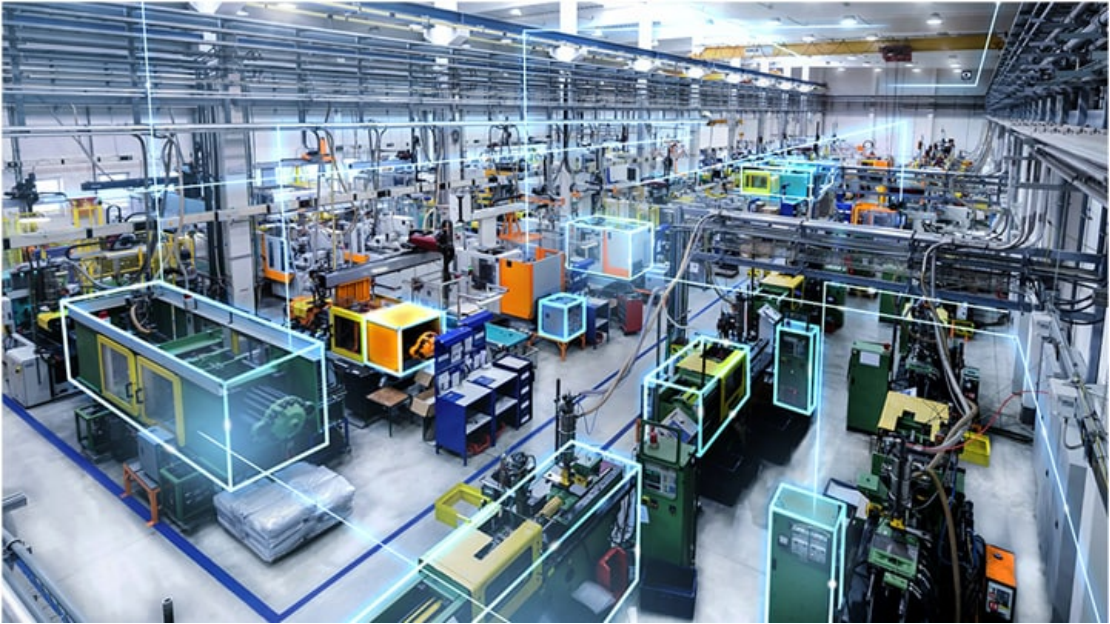
The professional construction includes 10 undergraduate teaching laboratories, including mechanical foundation, mechanical manufacturing technology foundation, interchangeability and precision measurement technology, intelligent sensors, electromechanical system control, mechanical system dynamics, intelligent robots, fluid transmission, mechanics, etc., with a total area of nearly 1500 square meters and 330 sets of various experimental instruments and equipment, with a total value of over 23 million yuan. In addition, there is also one key laboratory of ordinary universities in Guangdong Province, one provincial-level digital manufacturing experimental center, and one Shenzhen University of Technology Siemens (China) digital factory, which can strongly support students to participate in scientific research activities.
In addition, the following specialized teaching laboratories have been established: Electrical and Electronics Experiment Center, Control Theory and Application Laboratory, Control System Simulation and Rapid Prototyping Laboratory, Machine Vision and Intelligent Control Laboratory, Power Electronics and Electric Machine Laboratory, PLC Laboratory, Precision Motion Control Laboratory, Virtual Instrumentation and Detection Technology Laboratory, Process Control Laboratory (Beer Brewing Laboratory), Professional Virtual Simulation Machine Room, and Student Innovation Practice Center.
Additionally, we have established partnerships with nearly 30 companies, jointly established industry-academia cooperation practice bases, and created collaborative laboratories between the university and industry. We organize and guide students to participate in "industry-academia-research" practices, aiming to cultivate excellent engineers who possess industry knowledge, technical skills, and research and development abilities.
6.Professional Achievementsand Students’Awards
Implement the credit, GPA, and evaluation reward mechanisms for competitions, and organize frontline teaching and research teachers and enterprise engineers to conduct training on key skills and theoretical systems for industries and disciplines. Over the past five years, we have won 28 national-level awards, 22 provincial and ministerial-level awards, 15 industry qualification certifications, 66 school-level awards, and 14 industry association awards.
To bridge the gap between theoretical knowledge and industry applications, we have implemented the "Professor Responsibility System" as a key component of our educational approach. This system is designed to encourage scientific and technological innovation competitions, strengthen practical teaching, and foster collaboration between the university and industry in nurturing students. Students are encouraged to participate in innovation competitions where they can apply their theoretical knowledge and practical skills. These competitions provide valuable opportunities for students to showcase their skills, creativity, and problem-solving abilities while receiving guidance and feedback from experienced professionals.
Under the guidance of experienced faculty members, students in this program have participated in discipline-specific competitions and achieved 78 national-level awards (including 25 first prizes) and over 100 awards. They have also obtained 37 authorized patents and published 32 SCI papers. Teachers integrate engineering practice issues from collaborative projects with industry partners into project-based engineering courses, aiming to align students' knowledge with cutting-edge industry technologies and develop their ability to solve practical engineering problems. Students are provided with access to state-of-the-art facilities, industry experts, and real-world case studies, enabling them to develop a deep understanding of the latest advancements in the field of automatic control systems.
Telephone:+86 755-23256198
Zip code:518118
Address:No. 3002, Lantian Road, Pingshan District, Shenzhen, Guangdong, China.

SZTU WeChat Public Account

SGIM WeChat Public Account

Copyright @SZTU
