
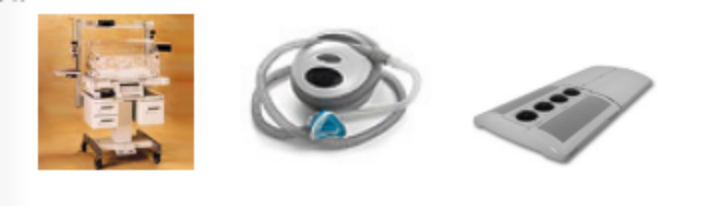
Humidity sensor chips are widely used in the following fields,
· Medical-baby incubator, ventilator
· Industrial-industrial air conditioning, refrigeration
· Meteorology-Communication
· cell phone
Currently, the internationally common methods include capacitive humidity sensors and resistive humidity sensor chips .
Capacitive humidity sensor chips are based on the capacitance of a dielectric polymer - the capacitance changes linearly with changes in the relative saturation of water vapor.
Resistive humidity sensor chips are based on bulk resistive polymer sensing polymers that ionize when water vapor is absorbed. AC resistance decreases exponentially with increasing relative humidity.
Capacitive humidity sensor chips have the following advantages over resistive ones: high operating temperature, full range relative humidity, high linearity and fast response time.
MEMS capacitive humidity sensor chip, based on the following structure,
Semiconductor silicon is used as the substrate to facilitate integration with subsequent processing circuits. The principle is based on the change in the insulation constant of the thin film polyimide polymer, resulting in a change in the sensing capacitance value; properly selected and post-processed special polyimide polymer, it will accurately absorb moisture in the air, or spit out the absorbed moisture to In the air, the humidity of the polymer is completely consistent with the humidity of the measured environment; by accurately measuring the capacitance value of the polymer, the measured humidity value can be obtained.
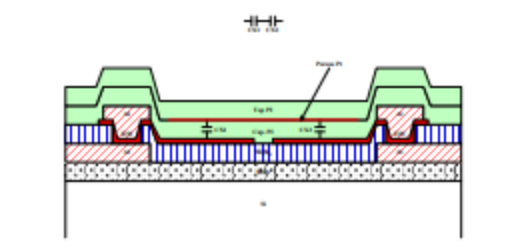
The research content of this project is
A. Optimize the relationship between humidity and capacitance, the temperature compensation principle of the sensor, and propose a design plan for the sensor chip;
B. Optimize material research, Polymer material selection, pre-processing, and post-processing to reduce the impact of hysteresis;
C. Research on the Platinum process of porous electrode material to ensure that humidity water molecules can pass freely through the electrode, thereby improving the response time and sensitivity of the chip.
Telephone:+86 755-23256198
Zip code:518118
Address:No. 3002, Lantian Road, Pingshan District, Shenzhen, Guangdong, China.

SZTU WeChat Public Account

SGIM WeChat Public Account

Copyright @SZTU
