
Current tolerance analysis is based on the traditional one/two-dimensional dimensional chain, which can only calculate dimensional and positional tolerances. A large number of geometric tolerances in product design cannot be considered, and the transmission method is in series, which cannot reflect the parallel situation in actual assembly. , the analysis results are often quite different from the actual ones and cannot accurately guide design and assembly. Three-dimensional (3D) tolerance analysis technology incorporates geometric tolerances, especially direction and shape tolerances, into the analysis process, expresses their changes and constraints in three-dimensional space, and uses the spatial coordinate transformation method to map series/parallel assembly relationships to functions. On the requirement (closed ring) end, the tolerance expression fully complies with the tolerance principle, and the tolerance transfer conforms to the actual assembly, and more accurate analysis results can be obtained. Therefore, three-dimensional tolerance analysis has gradually been replaced in industries such as automobiles, robots, high-end equipment, and home appliances. traditional tolerance analysis methods.
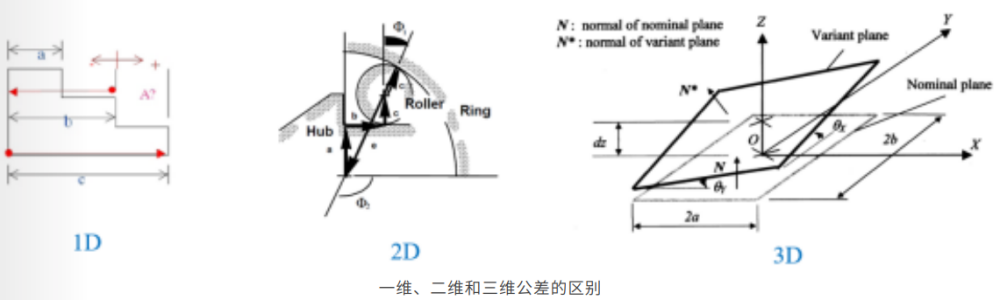
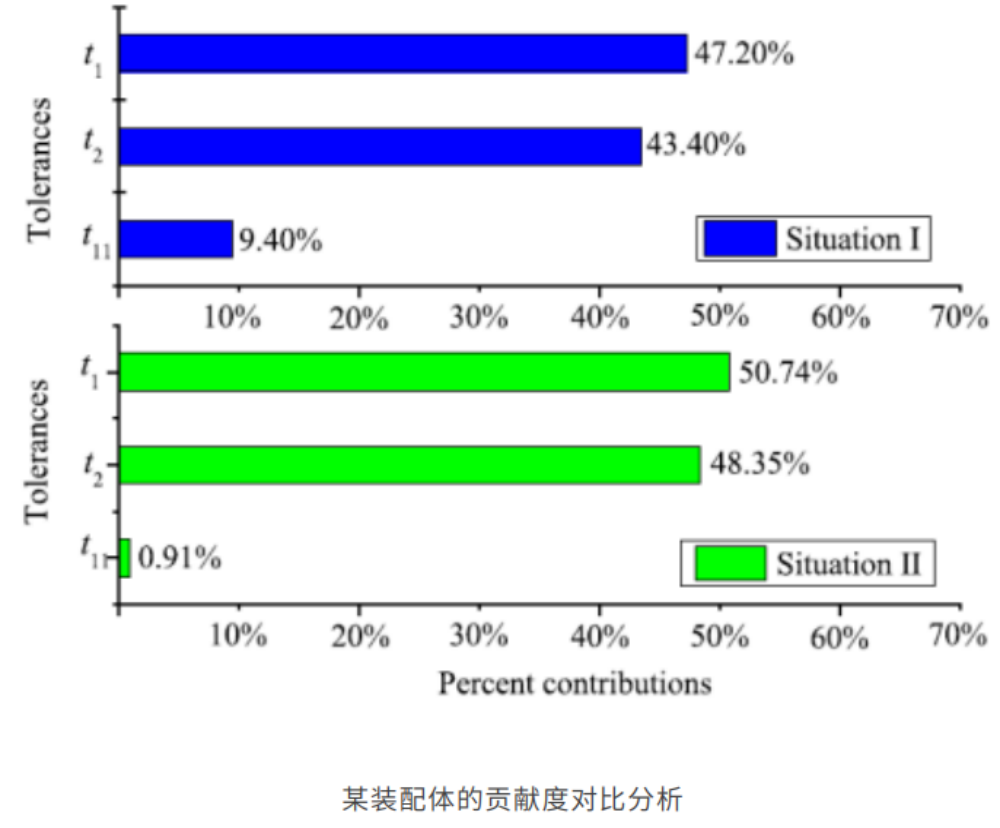
The purpose of tolerance analysis is, firstly, to analyze whether the current design tolerance can meet the functional requirements, and secondly, to optimize the allocation of tolerances under the constraints of functional requirements, cost and other factors. Three-dimensional tolerance analysis technology can easily identify and quantify the sensitivity and contribution of each component tolerance, providing an important reference for tolerance optimization. Under the constraints of the cost model, the tolerances with high sensitivity and contribution are compressed, and the tolerances with low sensitivity and contribution are relaxed, in order to achieve a balance between performance and cost.
This research group proposed the local parallel three-dimensional tolerance analysis technology for the first time in academia. Currently, it is conducting research on tolerance transfer in parallel and mixed connections, expression and transfer methods of directional tolerance, and the relationship between directional tolerance and other geometric tolerances and dimensional tolerances.
Based on the engineering concepts of data-driven quality and quality-driven technology, three-dimensional tolerance analysis and optimization can provide practical guidance for precision design, analysis and optimization, assembly verification, and continuous quality improvement services for industries such as automobiles, robots, equipment, and home appliances.
Telephone:+86 755-23256198
Zip code:518118
Address:No. 3002, Lantian Road, Pingshan District, Shenzhen, Guangdong, China.

SZTU WeChat Public Account

SGIM WeChat Public Account

Copyright @SZTU
