
For the engineering and scientific problems of enterprise R&D and production, finite element simulation technology is used to provide multi-physics coupling modeling and analysis technical services. Mainly includes: industrial product design, optimization, technical feasibility demonstration, fault attribution analysis, theoretical basis preliminary research, theoretical analysis of experimental phenomena, theoretical training of corporate R&D teams, etc.
Application cases (part)
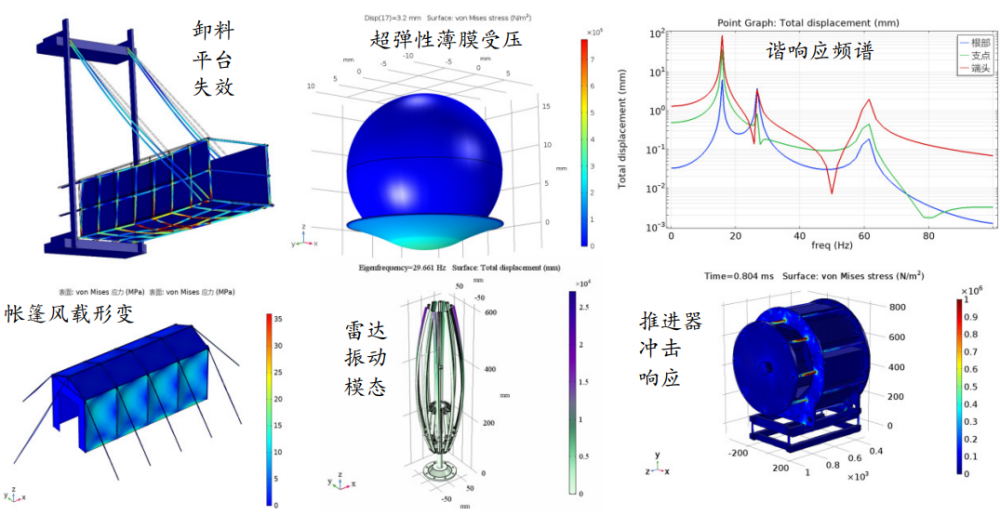
(1) Solid mechanics: Steady state failure analysis (plasticity, hyperelasticity, geotechnical structure, wind load, water load), fatigue analysis, vibration modal analysis (including prestressed), harmonic response analysis (including prestressed), transient analysis .
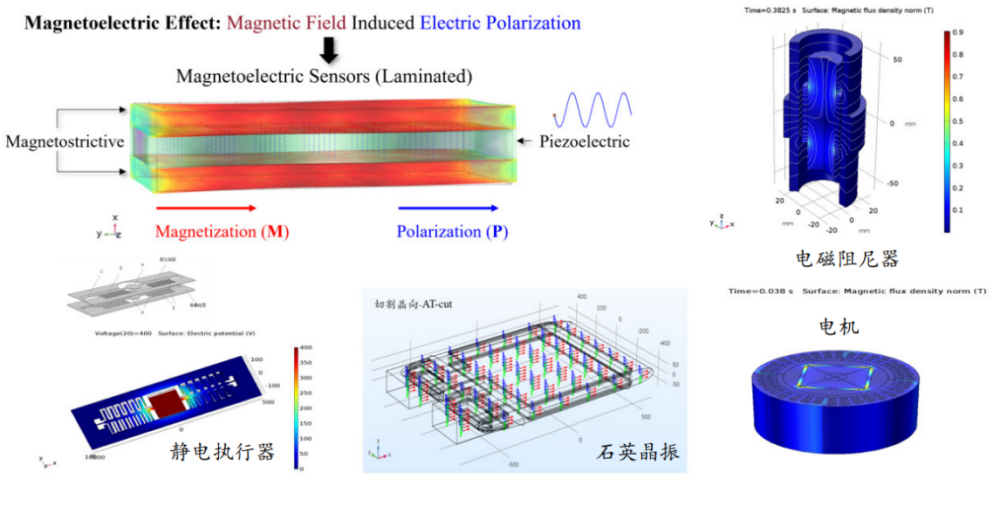
(2) Sensors and actuators: piezoelectric, magnetostrictive, ferroelectric devices, piezoresistive, magnetoresistive, MEMS, electrostatic actuators, motors, etc., electromagnetic ultrasonic transducers, phased array NDT.
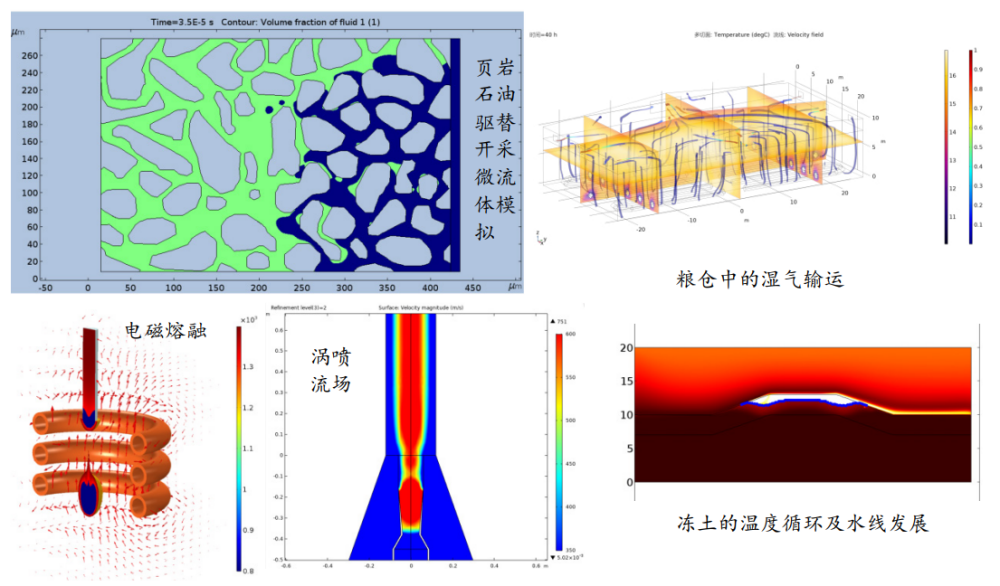
(3) Fluids: two-phase flow, three-phase flow, large eddies, microfluidics, heat and mass transfer in unsaturated porous media, fluid heat transfer in non-isothermal processes, hydrothermal salt multi-field coupling, etc.
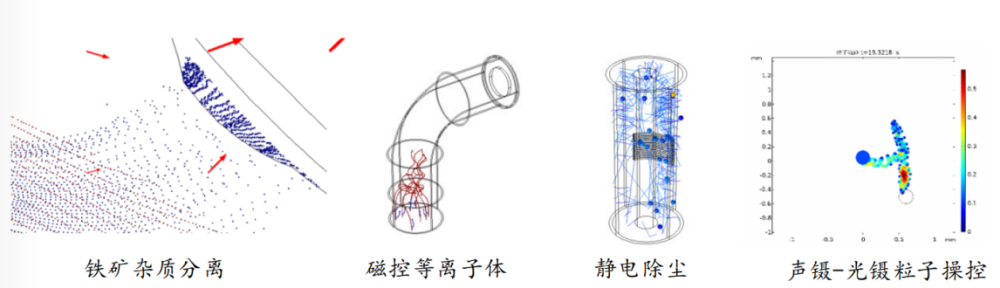
(4) Particle tracking: magnetic particles, charged particles, irregular-shaped fluid-solid coupling, electrostatic dust removal
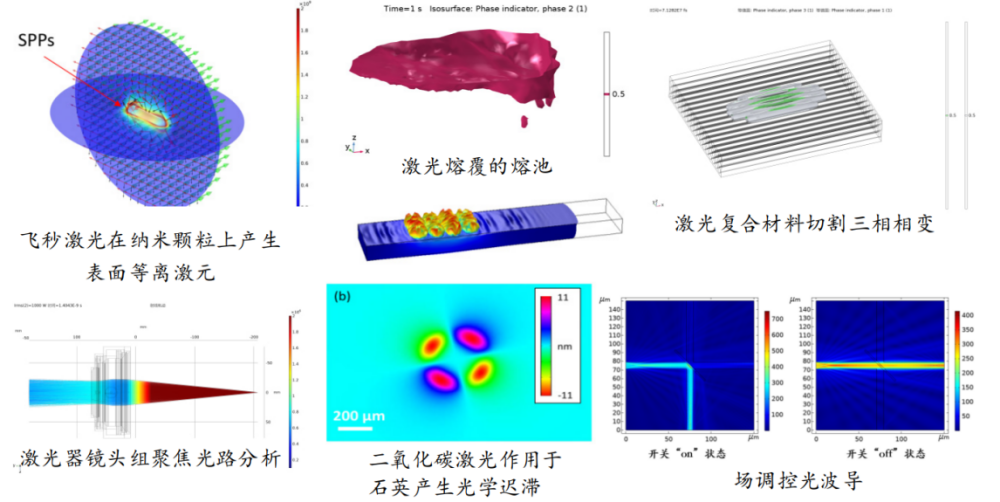
(5) Laser: femtosecond laser dual-temperature theory, laser cladding, laser ultrasound, laser-induced plasma, laser surface polishing, femtosecond laser composite material cutting, laser lithotripsy, photonic crystal, laser optical path simulation, optical waveguide control, laser propulsion.
Telephone:+86 755-23256198
Zip code:518118
Address:No. 3002, Lantian Road, Pingshan District, Shenzhen, Guangdong, China.

SZTU WeChat Public Account

SGIM WeChat Public Account

Copyright @SZTU
