
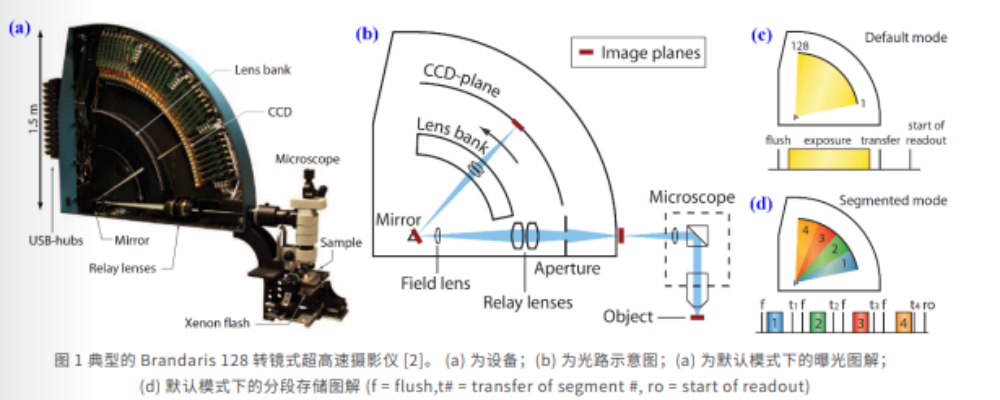
Polyhedral rotating scanning mirrors, referred to as rotating mirrors, are widely used in ultra-high-speed photography, laser micro-nano processing, laser scanning, laser Q-switching and other industries related to national defense technology, scientific research, and industrial applications.
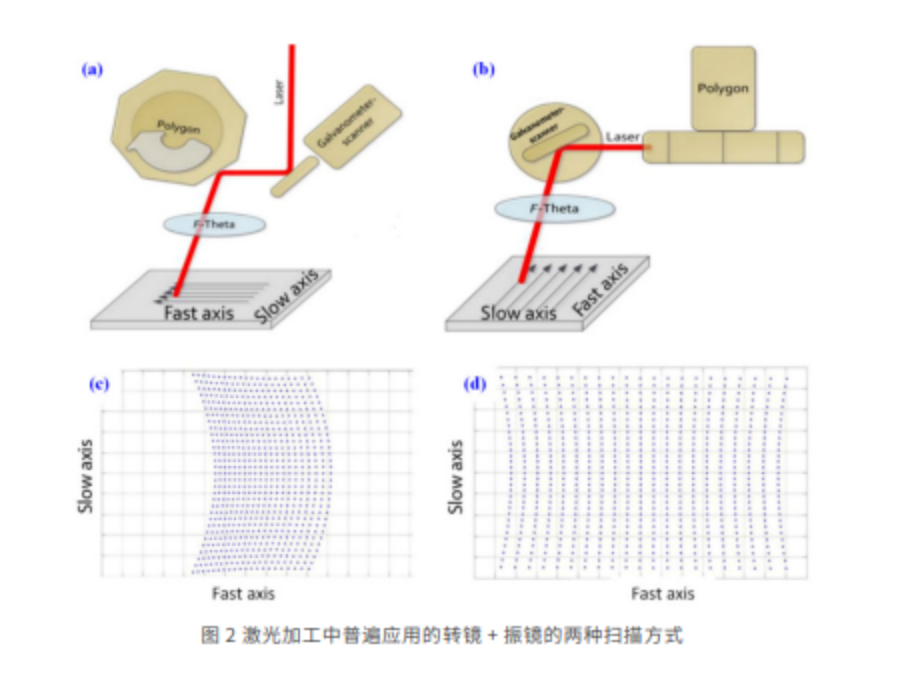
In the laser industry, galvanometer scanning is currently the most commonly used scanning method in the laser processing industry. Compared with galvanometer scanning, rotating mirror raster scanning has the characteristics of fixed scanning angle, fast scanning speed and high damage threshold. The rotating mirror is installed on the rotating shaft, and the high-speed motor drives the polyhedral rotating mirror to rotate at high speed, which can achieve large-angle, large-range, ultra-high-speed, high-precision and high-repeatability laser beam scanning (see Figure 2). In the field of scientific research, ultrashort pulse processing of three-dimensional micro-nano structural parts, especially micro-nano structural parts with curved surface structures. Due to the low average power of ultrashort pulses, the interval between pulses in high repetition frequency ultrashort pulse processing is too small, and the overlap area is too large. When galvanometer scanning is used to scan ultrashort pulses with a repetition rate above 1 MHz, the overlap area is If it is too large, it is easy to generate plasma and vaporization in the laser processing area, resulting in a heat-affected zone, which affects the processing quality. High-speed polyhedral rotating laser scanning mirror scanning is nearly 100 times faster than galvanometer scanning, which can solve this problem very well. The scanning speed of high-speed polyhedral rotating laser scanning mirror is nearly 100 times faster than that of galvanometer scanning, which can solve this problem very well. However, due to dynamic problems caused by the structure of the rotating mirror itself, it is currently difficult for polyhedral rotating mirrors to achieve long-term stable operation above 100,000 rpm.
1) Preliminary research basis and results
He has conducted systematic research on the mirror deformation, statics, dynamics, structural response, structural optimization, reliability assessment and prediction of polyhedral rotating mirrors, published more than 10 related academic papers, and applied for 4 related patents. The equitriangular cross-section honeycomb structure rotating mirror proposed for the lateral structure of the equitriangular prism structure aluminum alloy rotating mirror was applied to the SSF ultrafast process frame scanning simultaneous imaging recorder and achieved good results. At the SSF ultra-fast process frame scanning and simultaneous imaging recorder appraisal meeting, it was believed that the honeycomb structure rotating mirror has solved a key technical problem that has not been solved in the world and seriously affects the photographic performance of rotating mirror ultra-high-speed cameras.
2) Research plan and expected results
Shenzhen is a gathering place for my country's laser R&D and application companies, and is the city with the largest output value of my country's laser industry.
Telephone:+86 755-23256198
Zip code:518118
Address:No. 3002, Lantian Road, Pingshan District, Shenzhen, Guangdong, China.

SZTU WeChat Public Account

SGIM WeChat Public Account

Copyright @SZTU
