
With the development of laser technology and the continuous expansion of application fields, people's demand for lasers with new wavefronts is increasing. Currently, various new light fields are emerging, such as diffraction-free beams, vortex beams, Airy beams, etc. Through light field control technologies such as computational holography, the amplitude, phase and polarization distribution of ordinary light fields can be modulated to produce new light fields with special distributions. They are used in super-resolution optical microscopy imaging, optical micro-manipulation, and ultra-high density. It has important applications in optical data storage, high-capacity optical communications, biomedicine, optical micro-machining and other fields.
1) Preliminary research basis and results
(1) The transmission evolution behavior of a circular Airy beam in a crystal under the action of an electric field was studied, and the electric field tuning of the optical field distribution, polarization state, and angular momentum of the circular Airy beam was realized, and a method for generating a vortex beam was proposed. This work was published in Optics Express (OE, 25(13): 14654).
(2) The transmission evolution behavior of the circular Airy beam in the uniaxial crystal was obtained, and the light field distribution and coupling of the x and y components were obtained. This work was published in Applied Optics (Appl. Opt. 56(9) 2444- 2448 (2017)).
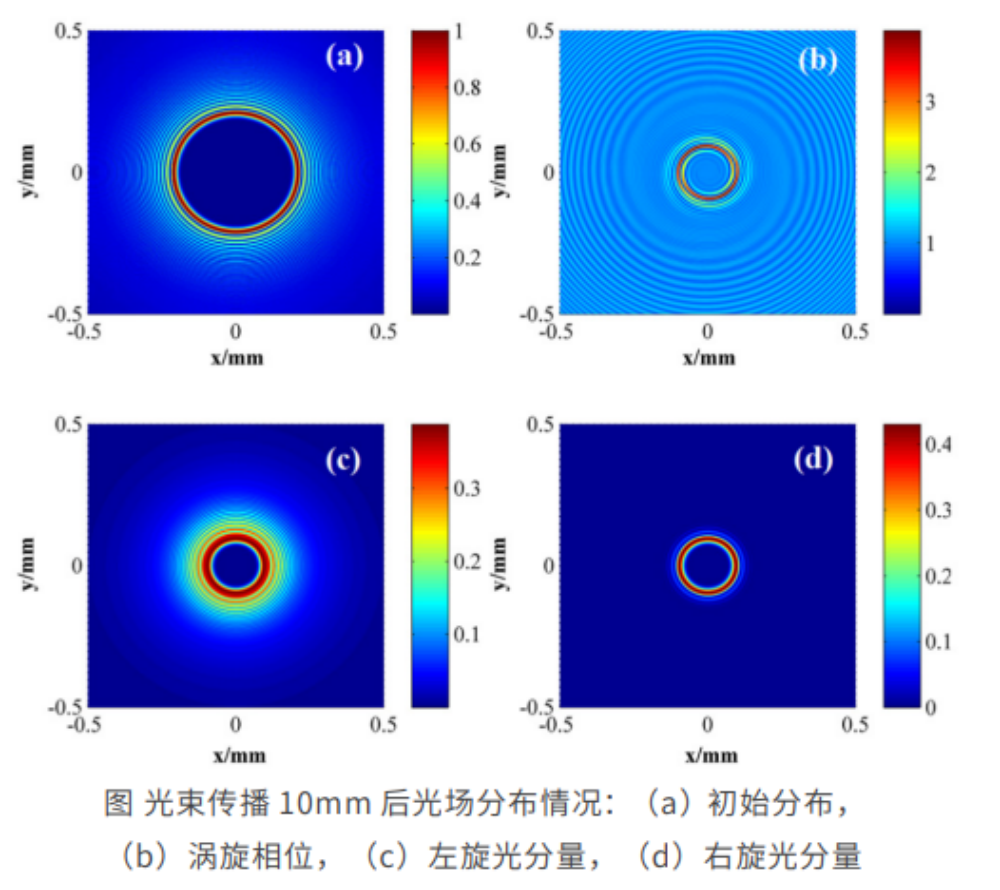
(3) Use a band-pass filter to modulate the circular Airy beam, thereby changing the propagation characteristics of the circular Airy beam and obtaining a longer "optical needle". This work was published in Optics Communication (Opt. Commun., 2017, 402:159-162).
2) Research plan and expected results:
Systematically study the propagation characteristics and regulation of various new beams in free space and anisotropic media, broaden the application range of new beams, and discuss their potential application value. Expect to publish more than 3 papers in important domestic and foreign journals within 3-5 years.
Telephone:+86 755-23256198
Zip code:518118
Address:No. 3002, Lantian Road, Pingshan District, Shenzhen, Guangdong, China.

SZTU WeChat Public Account

SGIM WeChat Public Account

Copyright @SZTU
